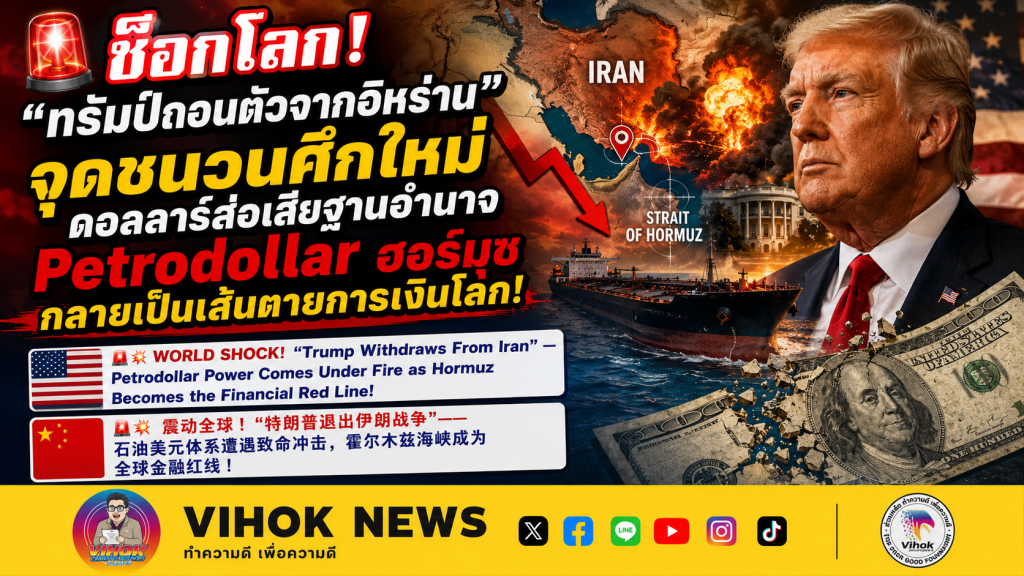


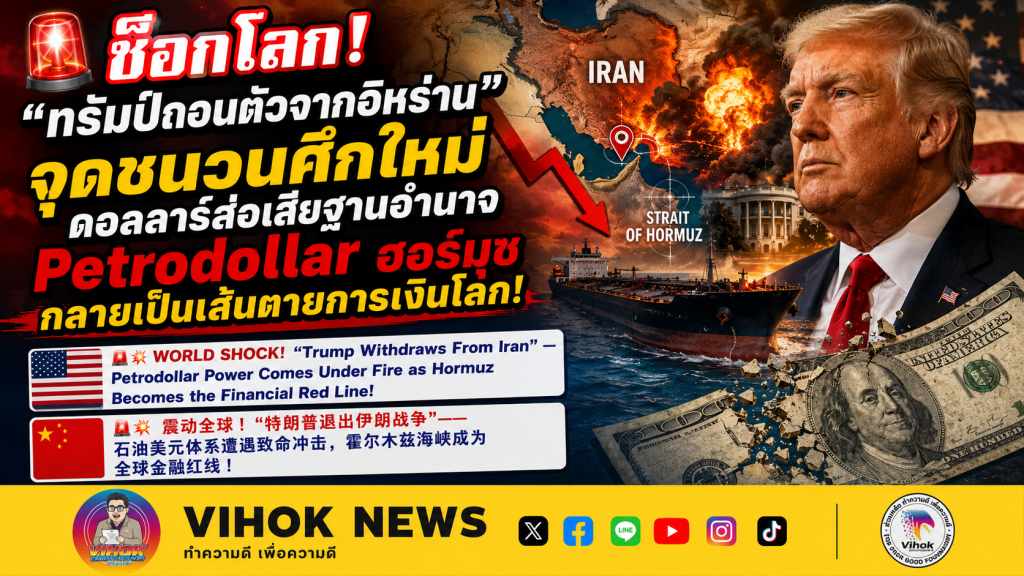
🚨💥 WORLD SHOCK! “Trump Withdraws From Iran” — Petrodollar Power Comes Under Fire as Hormuz Becomes the Financial Red Line!
🚨💥 震动全球!“特朗普退出伊朗战争”——石油美元体系遭遇致命冲击,霍尔木兹海峡成为全球金融红线!
8 สิงหาคม 2569
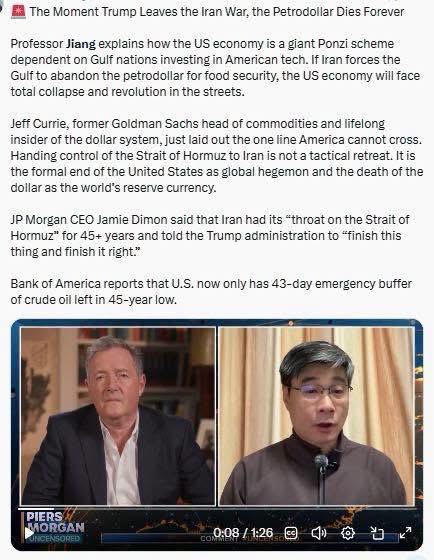
กระแสเตือนร้อนแรงเรื่องอนาคตของเงินดอลลาร์กลับมาสะเทือนตลาดโลกอีกครั้ง หลังแนวคิดของ Professor Jiang Xueqin ถูกนำมาเผยแพร่อย่างกว้างขวาง โดยเขาผูกสงครามสหรัฐฯ–อิหร่านเข้ากับอนาคตของระบบ Petrodollar และอำนาจทางการเงินของสหรัฐฯ
ในการสนทนาที่เผยแพร่เมื่อวันที่ 3 มีนาคม 2569 Jiang ระบุว่า สงครามอิหร่านไม่ได้มีเดิมพันอยู่เพียงสนามรบ แต่เกี่ยวพันกับโครงสร้างอำนาจของสหรัฐฯ ซึ่งเขามองว่าพึ่งพาบทบาทของเงินดอลลาร์และระบบ Petrodollar อย่างหนัก พร้อมคาดการณ์ว่าสงครามครั้งนี้อาจนำไปสู่การเปลี่ยนแปลงภูมิรัฐศาสตร์ครั้งใหญ่ (Singju Post)
🔥 จุดเดือดอยู่ที่ “ช่องแคบฮอร์มุซ”
ช่องแคบแห่งนี้เป็นเส้นทางพลังงานยุทธศาสตร์ของโลก และเมื่อสงครามทำให้การขนส่งน้ำมันผ่านพื้นที่ดังกล่าวสะดุด ตลาดโลกก็ต้องเผชิญแรงกระแทกทันที ทั้งราคาพลังงาน เงินเฟ้อ การขนส่ง และต้นทุนทางเศรษฐกิจ
Reuters รายงานเมื่อวันที่ 2 มีนาคม 2569 ว่าปฏิบัติการทางทหารของสหรัฐฯ ต่ออิหร่านสร้างความเสี่ยงใหม่ต่อเศรษฐกิจโลก ขณะที่ความตึงเครียดกระทบเส้นทางขนส่งน้ำมันผ่านช่องแคบฮอร์มุซ และทำให้ราคาน้ำมันพุ่งขึ้นอย่างรวดเร็ว (Reuters)
⚡ จาก “สงครามน้ำมัน” จึงถูกยกระดับเป็น “สงครามระบบการเงิน”
เหตุผลสำคัญคือ น้ำมันในตลาดโลกถูกกำหนดราคาและซื้อขายด้วยดอลลาร์มาเป็นเวลานาน ทำให้ประเทศผู้นำเข้าพลังงานต้องมีดอลลาร์เพื่อชำระค่าน้ำมัน ขณะเดียวกันรายได้จากน้ำมันของประเทศผู้ส่งออกจำนวนมหาศาลก็ไหลกลับเข้าสู่ระบบการเงินดอลลาร์
แต่ประวัติศาสตร์ไม่ได้ง่ายอย่างคำกล่าวว่าเคยมี “สัญญา 50 ปี” ที่บังคับซาอุดีอาระเบียให้ขายน้ำมันด้วยดอลลาร์เท่านั้น
AFP และ Asia Fact Check Lab ระบุว่า ไม่มีหลักฐานว่าสหรัฐฯ–ซาอุดีอาระเบียมีสนธิสัญญา 50 ปีที่กำหนดให้น้ำมันต้องซื้อขายเป็นดอลลาร์โดยเฉพาะ แม้ความร่วมมือด้านเศรษฐกิจและความมั่นคงในปี 1974 จะมีบทบาทสำคัญต่อโครงสร้าง Petrodollar ในเวลาต่อมา (Fact Check AFP)
🔥 และนี่คือจุดที่วิกฤตฮอร์มุซกำลังถูกจับตามอง
หากสหรัฐฯ ถอนกำลังหรือถอนบทบาทจากการค้ำประกันความมั่นคงของเส้นทางเดินเรือ จนประเทศต่าง ๆ เริ่มมองว่าอำนาจสหรัฐฯ ไม่สามารถรับประกันความปลอดภัยของเส้นทางพลังงานได้เหมือนเดิม แรงจูงใจในการกระจายการถือครองเงินตราและระบบชำระเงินก็อาจเพิ่มขึ้น
ประเด็นนี้ยิ่งร้อนแรงขึ้น หลังมีการเผยแพร่ข้อความบนโซเชียลที่อ้างชื่อ Jeff Currie อดีตหัวหน้าฝ่าย Commodities ของ Goldman Sachs ในลักษณะว่า
“ยกฮอร์มุซให้อิหร่าน = ดอลลาร์ตาย”
อย่างไรก็ตาม ข้อความดังกล่าว ไม่ควรถูกนำเสนอเป็นคำพูดที่ยืนยันโดยตรงของ Currie เพราะหลักฐานที่ตรวจสอบได้เกี่ยวกับมุมมองของเขาเน้นผลกระทบระยะยาวของวิกฤตฮอร์มุซต่อการผลิต การเดินเรือ การเคลียร์ทุ่นระเบิด และระบบพลังงานโลก
เมื่อวันที่ 16 มิถุนายน 2569 เวลา 10:05 น. มีรายงานว่าความเห็นของ Currie ระบุว่า แม้เกิดข้อตกลงหยุดยิงและเปิดช่องแคบฮอร์มุซอีกครั้ง การขนส่งน้ำมันอาจยังไม่กลับสู่ระดับปกติก่อนสงครามจนถึง ปลายปี 2569 เนื่องจากปัญหาการเก็บกู้ทุ่นระเบิด โลจิสติกส์ของเรือ และการเริ่มต้นการผลิตใหม่ (Edgen)
💥 ดังนั้น “ฮอร์มุซ” จึงไม่ใช่แค่เส้นทางน้ำมันอีกต่อไป
มันกลายเป็นจุดยุทธศาสตร์ที่เชื่อมโยง สงคราม–พลังงาน–การค้า–ดอลลาร์–ทุนสำรองระหว่างประเทศ เข้าด้วยกัน
หากประเทศผู้ผลิตและผู้บริโภคน้ำมันหันไปใช้สกุลเงินอื่นมากขึ้น ขณะเดียวกันลดการถือครองสินทรัพย์ดอลลาร์และสร้างระบบชำระเงินทางเลือก แรงกดดันต่อบทบาทของดอลลาร์ก็จะเพิ่มขึ้น
แต่การที่ Petrodollar จะ “ล่มสลายตลอดกาล” ในทันทีนั้น ยังไม่ใช่ข้อเท็จจริงที่เกิดขึ้นแล้ว เพราะดอลลาร์ยังมีฐานสนับสนุนขนาดใหญ่จากตลาดการเงินสหรัฐฯ ตลาดพันธบัตร และการใช้ดอลลาร์ในระบบการค้าโลก
สิ่งที่กำลังเกิดขึ้นจึงรุนแรงกว่าแค่ราคาน้ำมันพุ่ง
โลกกำลังจับตาว่า หากอำนาจของสหรัฐฯ ในการค้ำประกันเส้นทางพลังงานถูกลดทอนลงจริง ระบบการเงินที่สร้างขึ้นรอบดอลลาร์จะเริ่มถูกเขย่าจากจุดใดก่อน
และช่องแคบฮอร์มุซกำลังกลายเป็นหนึ่งในจุดชี้ชะตาที่สำคัญที่สุดของเกมนี้
สำนักข่าววิหคนิวส์ อ้างอิง: Reuters, AFP, Asia Fact Check Lab และข้อมูลบทสัมภาษณ์ Professor Jiang Xueqin / Jeff Currie (Reuters)
#Petrodollar #Iran #Trump #Hormuz #Dollar #USADollar #IranWar #Oil #CrudeOil #Geopolitics #GlobalEconomy #WorldEconomy #JeffCurrie #JiangXueqin #MiddleEast #EnergyCrisis #DollarDominance #VihokNews
🚨💥 WORLD SHOCK! “Trump Withdraws From Iran” — Petrodollar Power Comes Under Fire as Hormuz Becomes the Financial Red Line!
August 8, 2026
A powerful warning over the future of the U.S. dollar is once again shaking global markets after comments associated with Professor Jiang Xueqin gained widespread attention.
Jiang has linked the U.S.–Iran conflict to the future of the petrodollar system, arguing that the stakes extend far beyond oil and into the foundations of American economic and geopolitical power.
In an interview published on March 3, 2026, Jiang argued that the Iran war could fundamentally reshape the geopolitical order and directly challenged the long-term stability of the dollar-centered system. (Singju Post)
🔥 The critical battlefield is the Strait of Hormuz.
Hormuz is one of the world’s most important energy chokepoints. Any prolonged disruption can immediately hit oil supplies, shipping, inflation and global economic activity.
Reuters reported on March 2, 2026, that the U.S.–Iran conflict had already disrupted oil shipping through the Strait of Hormuz and created new risks for global economic stability. (Reuters)
⚡ The conflict has therefore evolved from an oil crisis into a battle over the financial system.
For decades, oil has largely been priced and traded in U.S. dollars. That structure creates global demand for dollars because energy-importing countries need the currency to settle international oil transactions.
However, the history is more complicated than the viral claim that a formal 50-year U.S.–Saudi agreement forced Saudi Arabia to sell oil exclusively in dollars.
AFP and Asia Fact Check Lab found no evidence of such a 50-year treaty. The 1974 U.S.–Saudi economic cooperation agreement was important to the broader financial and security relationship, but it did not formally require all Saudi oil sales to be conducted exclusively in dollars. (Fact Check AFP)
🔥 That makes Hormuz the key strategic pressure point.
If Washington retreats from guaranteeing the security of maritime energy routes, countries could increasingly diversify their currencies, reserves and payment systems.
Social media posts have also circulated a dramatic statement attributed to Jeff Currie, former global head of commodities research at Goldman Sachs, claiming that handing Hormuz to Iran would mean “the death of the dollar.”
That wording should not be treated as a verified direct quotation from Currie.
What can be documented is that Currie has warned about the structural consequences of the Hormuz crisis for energy markets and global supply chains.
On June 16, 2026, a report citing Currie said that even after a ceasefire and reopening of Hormuz, oil flows might not return to pre-war levels until late 2026, because of mine clearance, shipping logistics and the restart of Gulf production. (Edgen)
💥 Hormuz is therefore no longer just an oil route.
It has become a strategic junction connecting war, energy, trade, the dollar and global reserves.
If oil producers and consumers increasingly move toward alternative currencies and payment systems while reducing their exposure to dollar assets, pressure on dollar dominance could intensify.
But the claim that the Petrodollar has already collapsed forever is not an established fact.
The dollar still rests on enormous financial infrastructure, including U.S. capital markets, Treasury markets and its extensive role in international trade.
The real battle is now clear:
If U.S. power to guarantee the world’s critical energy routes weakens, the consequences could reach far beyond oil prices — striking at the financial architecture that has supported American power for decades.
And the Strait of Hormuz is emerging as one of the most important strategic pressure points in that struggle.
Vihok News Agency. Sources: Reuters, AFP, Asia Fact Check Lab, Professor Jiang Xueqin interviews and reporting on Jeff Currie’s views. (Reuters)
#Petrodollar #Iran #Trump #Hormuz #Dollar #USADollar #IranWar #Oil #CrudeOil #Geopolitics #GlobalEconomy #WorldEconomy #JeffCurrie #JiangXueqin #MiddleEast #EnergyCrisis #DollarDominance #VihokNews
🚨💥 震动全球!“特朗普退出伊朗战争”——石油美元体系遭遇致命冲击,霍尔木兹海峡成为全球金融红线!
2026年8月8日
有关美元未来命运的激烈警告再次震动全球市场。
近期,“Professor Jiang(蒋学勤)”关于伊朗战争、美元以及“石油美元体系”的观点在网络上迅速传播。
在2026年3月3日发布的一次访谈中,Jiang认为,美伊战争的真正影响并不只是军事层面,而可能进一步改变全球地缘政治格局以及以美元为核心的国际经济体系。 (Singju Post)
🔥 真正的战略爆点,是“霍尔木兹海峡”。
霍尔木兹海峡是全球最重要的能源运输通道之一。
一旦长期受到战争影响,全球石油供应、运输成本、通胀以及经济增长都会受到冲击。
路透社在2026年3月2日报道称,美伊冲突已经影响通过霍尔木兹海峡的石油运输,并给全球经济稳定带来新的风险。 (Reuters)
⚡ 因此,这场冲突正在从“石油战争”升级为“金融体系之战”。
几十年来,全球石油市场大量使用美元定价和结算。
进口石油的国家需要美元支付能源费用,而石油出口国获得的大量美元收入又会重新进入全球美元金融体系。
不过,网络上流传的“1974年美沙签署50年协议、强制沙特只能用美元出售石油”的说法并不准确。
法新社和亚洲事实核查实验室均指出,没有证据证明存在这样一份强制沙特石油必须全部使用美元交易的“50年协议”。
1974年的美沙经济合作确实强化了两国之间的经济与安全关系,但并不存在一份明确规定沙特所有石油必须使用美元交易的50年条约。 (Fact Check AFP)
🔥 而霍尔木兹海峡,正在成为新的战略压力点。
如果美国减少甚至退出对海上能源通道安全的保障,使全球市场认为美国已经无法像过去一样确保霍尔木兹航运安全,那么各国进一步分散外汇储备、能源结算货币以及国际支付体系的动力可能明显增强。
与此同时,社交媒体上还出现了一则极具冲击力的说法,将“霍尔木兹交给伊朗”等同于“美元死亡”,并将这句话归于前高盛大宗商品负责人 Jeff Currie。
但目前应当明确:
这句话不能直接视为已经得到证实的Currie原话。
能够得到报道支持的是,Currie确实警告过霍尔木兹危机可能对全球能源市场和供应链产生长期结构性影响。
2026年6月16日10时05分发布的一份报道指出,Currie认为,即使停火并重新开放霍尔木兹海峡,石油运输恢复到战前水平仍可能拖延至2026年底,原因包括扫雷、船运物流以及海湾地区恢复生产等问题。 (Edgen)
💥 霍尔木兹已经不再只是石油运输通道。
它正在成为连接:
战争、能源、贸易、美元与全球外汇储备
的关键战略节点。
如果越来越多的能源生产国和消费国开始采用其他货币进行结算,同时减少美元资产配置,那么美元在全球金融体系中的主导地位将面临更大压力。
但必须指出:
“石油美元已经永久崩溃”目前并不是已经发生的事实。
美元仍然拥有庞大的金融基础,包括美国资本市场、美国国债市场以及全球贸易和金融体系中的广泛使用。
真正正在发生的变化是:
霍尔木兹危机正在把能源安全与美元体系直接连接起来。
如果美国未来无法继续提供全球关键能源航道的安全保障,那么冲击可能不再只是油价上涨,而可能进一步触及支撑美国全球影响力数十年的金融结构。
而霍尔木兹海峡,正在成为这场全球权力重组中最危险、最关键的战略节点之一。
维霍克新闻社(Vihok News)综合报道。参考来源:路透社、法新社、亚洲事实核查实验室、Professor Jiang Xueqin相关访谈及Jeff Currie相关报道。 (Reuters)
#石油美元 #伊朗 #特朗普 #霍尔木兹海峡 #美元 #美元霸权 #伊朗战争 #石油 #原油 #地缘政治 #全球经济 #世界经济 #JeffCurrie #JiangXueqin #中东 #能源危机 #美元主导地位 #维霍克新闻