


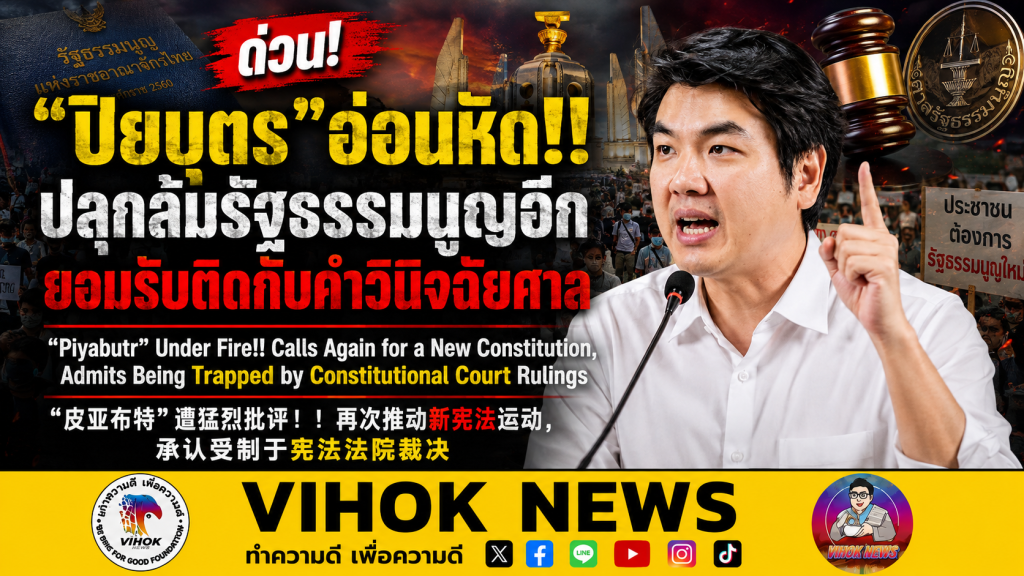
🚨 “Piyabutr” Under Fire!! Calls Again for a New Constitution, Admits Being Trapped by Constitutional Court Rulings
🚨“皮亚布特”遭猛烈批评!!再次推动新宪法运动,承认受制于宪法法院裁决
7 สิงหาคม 2569
นายปิยบุตร แสงกนกกุล เลขาธิการคณะก้าวหน้า ออกมาเสนอแนวทางผลักดันการจัดทำรัฐธรรมนูญฉบับใหม่ โดยชี้ว่า หลังประชามติเมื่อวันที่ 8 กุมภาพันธ์ 2569 ประชาชนลงมติเห็นชอบให้มีรัฐธรรมนูญฉบับใหม่ด้วยคะแนน 21,621,638 เสียง แต่จนถึงขณะนี้ยังไม่มีรัฐธรรมนูญฉบับใหม่เกิดขึ้น
ปิยบุตรมองว่า อุปสรรคสำคัญคือการที่ฝ่ายการเมืองยังติดอยู่กับกรอบจากคำวินิจฉัยของศาลรัฐธรรมนูญ ซึ่งกำหนดแนวทางว่าการจัดทำรัฐธรรมนูญฉบับใหม่ต้องผ่านกระบวนการประชามติและการดำเนินการโดยรัฐสภา
เขาเสนอให้เปลี่ยนกรอบความคิด โดยยกแนวคิดทางรัฐธรรมนูญเรื่อง “Pouvoir constituant originaire” หรืออำนาจสถาปนารัฐธรรมนูญดั้งเดิม ขึ้นมาเป็นฐานในการรณรงค์
ปิยบุตรให้เหตุผลว่า ประชาชนเป็นผู้มีอำนาจสูงสุดในการสถาปนารัฐธรรมนูญ และการลงประชามติวันที่ 8 กุมภาพันธ์ 2569 เป็นการแสดงเจตจำนงโดยตรงของประชาชนว่า ต้องการให้มีรัฐธรรมนูญฉบับใหม่
พร้อมเสนอว่า ไม่ควรปล่อยให้คำวินิจฉัยของศาลรัฐธรรมนูญกลายเป็น “กรอบขัง” กระบวนการจัดทำรัฐธรรมนูญใหม่ เพราะศาลรัฐธรรมนูญเองก็เป็นองค์กรที่เกิดขึ้นภายใต้รัฐธรรมนูญ 2560
🔥 เปิด 4 โจทย์ใหม่ ดัน “รัฐธรรมนูญใหม่” กลับมาเป็นธงการเมือง
ปิยบุตรเสนอแนวทางสำคัญ 4 ประเด็น ได้แก่
- สร้างแนวร่วมประชาชนให้กว้างที่สุด
เขามองว่าประเด็น “รัฐธรรมนูญใหม่” สามารถเชื่อมโยงประชาชนได้หลากหลายกลุ่ม โดยไม่จำเป็นต้องผูกติดกับพรรคการเมืองใดพรรคการเมืองหนึ่ง
- ขยายประเด็นจากโครงสร้างถึงชีวิตประจำวัน
ตั้งแต่ที่มาของวุฒิสภา ระบบเลือกตั้ง ศาลรัฐธรรมนูญ องค์กรอิสระ การกระจายอำนาจ การปฏิรูประบบราชการ การปราบทุจริต ไปจนถึงสิทธิ เสรีภาพ การศึกษา ที่ดินทำกิน และสวัสดิการ ล้วนสามารถเชื่อมโยงกลับมายังรัฐธรรมนูญได้
- ใช้ประชามติ 8 กุมภาพันธ์ 2569 เป็นฐานความชอบธรรม
ปิยบุตรมองว่าผลประชามติเป็นฐานสำคัญในการรณรงค์ เพราะประชาชนได้แสดงเจตจำนงเรื่องรัฐธรรมนูญฉบับใหม่ไปแล้ว
- จัดรูปขบวนรณรงค์ใหม่
เขาเสนอว่า การเคลื่อนไหวไม่ควรจำกัดอยู่เพียงการต่อสู้ในรัฐสภาเพื่อเสนอร่างแก้ไขรัฐธรรมนูญกำหนดที่มาของสภาร่างรัฐธรรมนูญ แต่ควรผลักดันทางความคิดให้ประชาชนเข้าใจเรื่องอำนาจสถาปนารัฐธรรมนูญมากขึ้น
⚡ ปิยบุตรเตือน “ติดหล่มรัฐสภา” อาจถูกบีบเหลือแค่ 2 ทาง
ปิยบุตรระบุว่า หากการเคลื่อนไหวติดอยู่เฉพาะในรัฐสภา อาจถูกจำกัดให้เหลือเพียงสองทาง คือ อยู่กับรัฐธรรมนูญ 2560 ต่อไป หรือเดินหน้าจัดทำรัฐธรรมนูญใหม่ผ่านกระบวนการที่ฝ่ายการเมืองและเสียงข้างมากในรัฐสภาเป็นผู้กำหนด
เขาจึงเสนอให้ดึงประเด็นกลับมาสู่ประชาชน และชูผลประชามติ 8 กุมภาพันธ์ 2569 เป็นฐานในการรณรงค์
ปิยบุตรเชื่อว่า หากประชาชนเข้าใจถึงอำนาจในการสถาปนารัฐธรรมนูญของตนเอง และเกิดการรวมพลังทางการเมืองอย่างเพียงพอ พรรคการเมืองที่ทำหน้าที่เป็น “กองหน้า” ก็สามารถนำเจตจำนงดังกล่าวไปผลักดันการจัดทำรัฐธรรมนูญฉบับใหม่ได้
ทั้งนี้ แนวคิดดังกล่าวเป็นข้อเสนอและความเห็นทางการเมืองของปิยบุตร ขณะที่กระบวนการจัดทำรัฐธรรมนูญใหม่ยังต้องเป็นไปตามกฎหมายและกระบวนการที่มีผลบังคับใช้ในขณะนั้น
สำนักข่าววิหคนิวส์
อ้างอิง: โพสต์เฟซบุ๊กของนายปิยบุตร แสงกนกกุล
ปิยบุตร #รัฐธรรมนูญใหม่ #รัฐธรรมนูญ2560 #ประชามติ #ประชามติ2569 #อำนาจสถาปนารัฐธรรมนูญ #ศาลรัฐธรรมนูญ #การเมืองไทย #คณะก้าวหน้า #สำนักข่าววิหคนิวส์
🇬🇧 English
🚨 “Piyabutr” Under Fire!! Calls Again for a New Constitution, Admits Being Trapped by Constitutional Court Rulings
August 7, 2026
Piyabutr Saengkanokkul, Secretary-General of the Progressive Movement, has proposed a new approach to pushing forward the drafting of a new constitution.
He pointed out that after the February 8, 2026 referendum, voters approved the proposal to establish a new constitution with 21,621,638 votes. Yet, as of now, no new constitution has been created.
Piyabutr argues that a major obstacle is the political system’s continued reliance on the framework established by rulings of the Constitutional Court, which have set out a process requiring a referendum and parliamentary involvement in drafting a new constitution.
He proposed changing the framework of the debate by invoking the constitutional concept of “Pouvoir constituant originaire,” or original constituent power, as the foundation for a new campaign.
Piyabutr argues that the people are the ultimate holders of constituent power, and that the February 8, 2026 referendum represented a direct expression of the people’s will to establish a new constitution.
He further argued that the Constitutional Court’s rulings should not become a “cage” restricting the process of drafting a new constitution, noting that the Constitutional Court itself was established under the 2017 Constitution.
🔥 Four New Challenges: Put “A New Constitution” Back at the Center of the Political Campaign
Piyabutr proposed four key approaches:
- Build the broadest possible public coalition
He believes the issue of a “new constitution” can bring together people from a wide range of groups without being tied exclusively to any particular political party.
- Expand the issue from political structures to everyday life
Issues including the origins and role of the Senate, the electoral system, the Constitutional Court, independent agencies, decentralization, civil-service reform, anti-corruption measures, rights and freedoms, education, land access and welfare can all be connected to the constitution.
- Use the February 8, 2026 referendum as a source of legitimacy
Piyabutr views the referendum result as an important foundation for renewed campaigning because voters had already expressed their desire for a new constitution.
- Restructure the campaign
He argued that the movement should not be confined to parliamentary efforts to amend the constitution and establish a constitutional drafting assembly. Instead, it should focus on building public understanding of constituent power.
⚡ Piyabutr Warns: “Getting Stuck in Parliament” Could Leave Only Two Choices
Piyabutr argued that if the movement remains confined to Parliament, it could ultimately be forced into two choices: continue living under the 2017 Constitution, or pursue a new constitution through a process largely determined by political parties and parliamentary majorities.
He therefore called for the issue to be brought back to the people, using the February 8, 2026 referendum as the foundation for renewed political campaigning.
Piyabutr believes that if people understand their own constituent power and sufficient political forces unite behind the effort, political parties acting as a “vanguard” could carry that public mandate forward and push for a new constitution.
The views above represent Piyabutr Saengkanokkul’s political opinions and proposals. Any actual process for drafting a new constitution remains subject to the laws and procedures in force at the time.
Vihok News Agency
Reference: Facebook post by Piyabutr Saengkanokkul
Piyabutr #NewConstitution #2017Constitution #Referendum #2026Referendum #ConstituentPower #ConstitutionalCourt #ThaiPolitics #ProgressiveMovement #VihokNews
⸻
🇨🇳 中文
🚨 “皮亚布特”遭猛烈批评!!再次推动新宪法运动,承认受制于宪法法院裁决
2026年8月7日
前进运动秘书长皮亚布特·盛甘诺库(Piyabutr Saengkanokkul)提出推动制定新宪法的新思路。
他指出,在2026年2月8日举行的全民公投中,支持制定新宪法的票数达到21,621,638票。然而截至目前,新的宪法仍然没有正式产生。
皮亚布特认为,目前面临的主要障碍之一,是政治力量仍然受到宪法法院裁决所确立的框架限制。相关裁决认为,制定新宪法需要经过全民公投,并由国会参与相关程序。
对此,皮亚布特提出重新构建政治讨论框架,并援引宪法理论中的“Pouvoir constituant originaire”,即“原始制宪权”作为推动新宪法运动的基础。
皮亚布特认为,人民是宪法创制权的最终拥有者,而2026年2月8日的全民公投,就是人民直接表达希望制定新宪法的政治意志。
他同时主张,不应让宪法法院的裁决成为限制制定新宪法的“牢笼”,并指出宪法法院本身也是依据2017年宪法所设立的机构。
🔥 提出4项新任务:重新把“新宪法”推上政治议程
皮亚布特提出四项主要方向:
一、建立最广泛的人民联盟
他认为,“新宪法”这一议题可以连接社会各阶层,不必局限于任何一个政党或政治阵营。
二、从政治制度延伸到民众日常生活
从参议院的产生方式、选举制度、宪法法院、独立机构,到地方分权、行政体系改革、反腐败,以及公民权利、自由、教育、土地和社会福利等,都可以与宪法问题建立联系。
三、以2026年2月8日全民公投作为正当性基础
皮亚布特认为,公投结果可以成为重新推动新宪法运动的重要基础,因为人民已经通过投票表达了希望拥有新宪法的意愿。
四、重新调整推动新宪法的政治路线
他主张,相关运动不应只局限于国会内部,通过修宪程序推动成立制宪机构,而应该进一步推动社会大众理解“制宪权”的概念。
⚡ 皮亚布特警告:困在国会战场,最终可能只剩“两条路”
皮亚布特认为,如果相关运动始终局限于国会内部,最终可能被迫在两种选择之间做出决定:继续接受2017年宪法,或者按照政治力量及国会多数所主导的程序推动制定新宪法。
因此,他主张将政治议题重新带回人民层面,并以2026年2月8日全民公投结果作为新的政治动员基础。
皮亚布特认为,如果人民真正理解自身所拥有的制宪权,并形成足够强大的政治力量,那么作为“先锋”的政党就可以承接人民的政治意志,推动制定新宪法。
需要说明的是,上述内容属于皮亚布特个人的政治观点与政治主张。未来是否以及如何制定新宪法,仍须依据届时有效的法律及相关程序推进。
Vihok News(维霍克新闻社)
参考来源:皮亚布特·盛甘诺库个人脸书帖文