


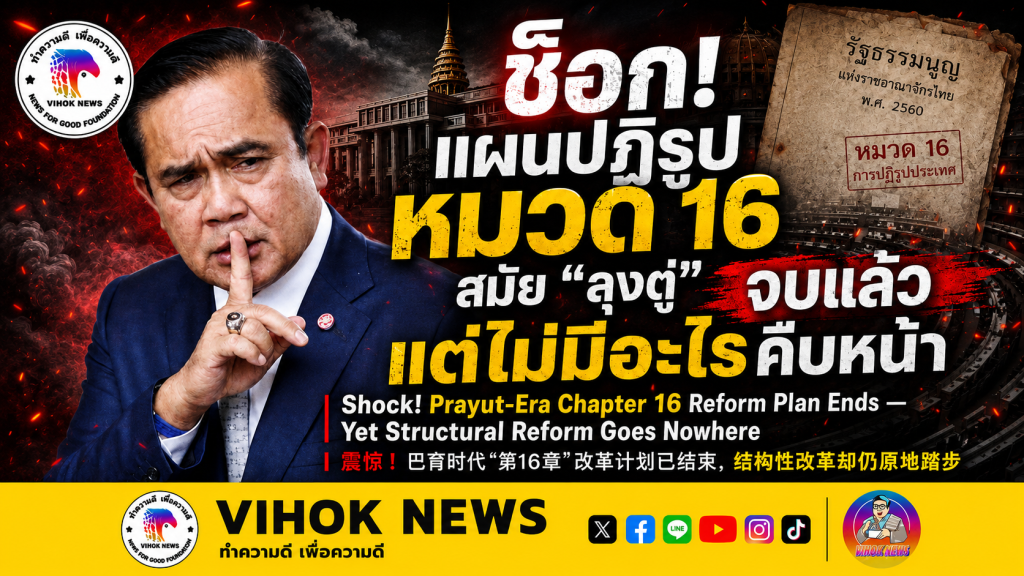
Shock! Prayut-Era Chapter 16 Reform Plan Ends — Yet Structural Reform Goes Nowhere
震惊!巴育时代“第16章”改革计划已结束,结构性改革却仍原地踏步
วันที่ 8 สิงหาคม พ.ศ. 2569 — ประเทศไทยผ่านรัฐบาลประยุทธ์ เศรษฐา แพทองธาร จนถึงรัฐบาลอนุทิน แต่การปฏิรูปตามหมวด 16 ของรัฐธรรมนูญ พ.ศ. 2560 ยังไม่สำเร็จเชิงโครงสร้าง
แผนปฏิรูปประเทศ 13 ด้าน 62 กิจกรรมสำคัญ สิ้นสุดเมื่อวันที่ 31 ธันวาคม พ.ศ. 2565 รัฐบาลประยุทธ์สร้างแผน กฎหมาย และราชการดิจิทัล
แต่การกระจายอำนาจ ลดการผูกขาด และปฏิรูปตำรวจยังไม่ถึงราก
รัฐบาลเศรษฐาและแพทองธารเดินหน้านโยบายเศรษฐกิจ ดิจิทัล และสวัสดิการ
แต่ไม่มีระบบรับช่วงงานปฏิรูปที่ระบุเจ้าภาพ เส้นตาย และตัวชี้วัดชัดเจน
วันที่ 9 เมษายน พ.ศ. 2569 เวลา 09.35 น. นายอนุทิน ชาญวีรกูล แถลงนโยบายปฏิรูปราชการ กฎหมาย ต่อต้านทุจริต และเพิ่มประสิทธิภาพรัฐ
แต่ต้องพิสูจน์ด้วยผลลัพธ์ ไม่ใช่จำนวนแผนและคณะกรรมการ
ฟันธง! ประเทศไทยไม่ได้ขาดแผน
แต่ขาดเจ้าภาพและกลไกบังคับให้เกิดผล เพราะอำนาจกับงบประมาณยังกระจุกอยู่ส่วนกลาง
รัฐบาลต้องเปิดบัญชีงานค้าง ผูกงบประมาณกับผลลัพธ์ และเปิดให้ประชาชนตรวจสอบ
มิฉะนั้นประเทศไทยจะติดหล่ม “ปฏิรูปเชิงพิธีกรรม” ต่อไป!
August 8, 2026 — Thailand has gone through the governments of Prayut Chan-o-cha, Srettha Thavisin, Paetongtarn Shinawatra and now Anutin Charnvirakul, yet the reforms mandated under Chapter 16 of the 2017 Constitution have still failed to deliver fundamental structural change.
The national reform plans covering 13 areas and 62 key activities formally ended on December 31, 2022. The Prayut administration produced reform plans, legislation and digital-government initiatives.
Yet decentralization, the reduction of monopolistic structures and police reform failed to reach the roots of the system.
The Srettha and Paetongtarn governments pushed ahead with economic, digital and welfare policies.
But there was no clear mechanism to carry unfinished reforms forward with designated owners, deadlines and measurable targets.
On April 9, 2026, at 9:35 a.m., Anutin Charnvirakul announced policies aimed at reforming the bureaucracy and laws, fighting corruption and improving government efficiency.
But success must be proven by results — not by the number of plans and committees created.
The conclusion is clear: Thailand does not lack reform plans.
What it lacks are accountable owners and mechanisms capable of turning those plans into results, while power and budgets remain concentrated at the central level.
The government must disclose unfinished reforms, tie budgets to measurable outcomes and open the process to public scrutiny.
Otherwise, Thailand risks remaining trapped in “ceremonial reform” — reform in form, but not in substance.
2026年8月8日——泰国从巴育政府,历经赛塔政府、佩通坦政府,再到如今的阿努廷政府,但《2017年宪法》第16章所规定的国家改革,至今仍未实现根本性的结构改革。
涵盖13个领域、62项重点工作的国家改革计划已于2022年12月31日结束。巴育政府任内制定了改革方案、推动相关法律,并推进政府数字化。
然而,权力下放、减少垄断以及警察改革,仍未真正触及制度根本。
赛塔政府和佩通坦政府随后推进经济、数字化和社会福利政策。
但对于尚未完成的改革,却缺乏明确的接续机制,没有清楚指定责任主体、完成期限以及衡量成果的指标。
2026年4月9日上午9时35分,阿努廷·参威拉军宣布推动官僚体系与法律改革、打击腐败并提高政府效率。
但改革成败最终必须靠实际成果证明,而不是看制定了多少计划、成立了多少委员会。
结论已经十分明确:泰国从来不缺改革计划。
真正缺少的是明确负责到底的主体,以及能够迫使改革产生实际成果的机制,因为权力与预算依然高度集中于中央。
政府必须公开尚未完成的改革清单,把预算与实际成果挂钩,并允许公众参与监督。
否则,泰国仍可能继续陷在“仪式化改革”的泥潭——有改革之名,却难见改革之实。
สำนักข่าววิหคนิวส์
Vihok News
#ปฏิรูปประเทศ #หมวด16 #รัฐบาลอนุทิน #รัฐบาลประยุทธ์ #การเมืองไทย #กระจายอำนาจ #สำนักข่าววิหคนิวส์ #NationalReform #Chapter16 #AnutinGovernment #PrayutGovernment #ThaiPolitics #Decentralization #VihokNews #国家改革 #第16章 #阿努廷政府 #巴育政府 #泰国政治 #权力下放 #泰国改革 #VihokNews