


กรุงเทพฯ
12 สิงหาคม 2569
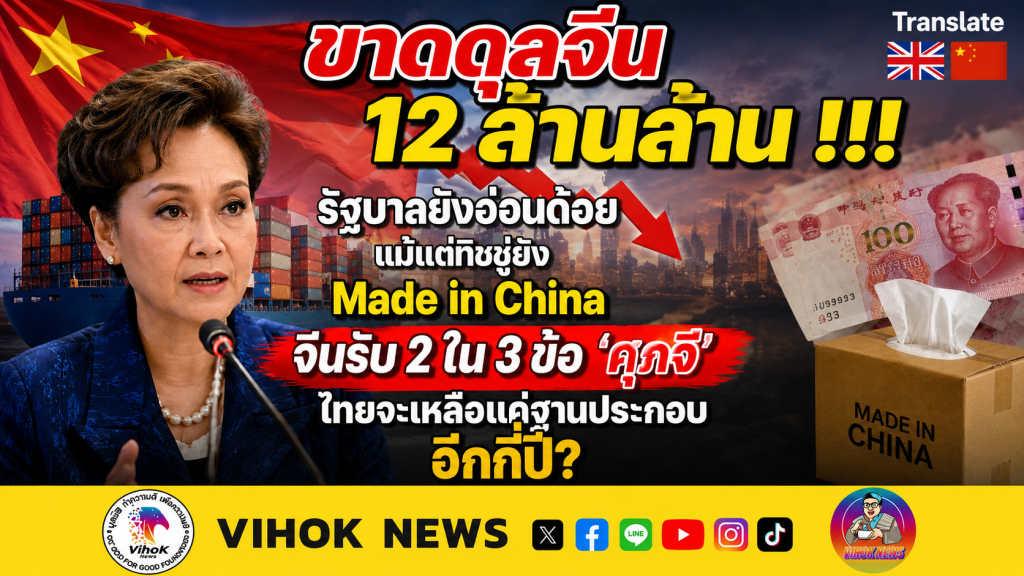
12 ล้านล้านบาท คือตัวเลขขาดดุลการค้าที่ไทยสะสมกับจีนตลอด 10 ปี และความย้อนแย้งอยู่ตรงที่ ยิ่งทุนจีนหลั่งไหลเข้ามาตั้งโรงงาน EV และดาต้าเซ็นเตอร์มากเท่าไร ตัวเลขนี้ยิ่งบานปลาย เพราะเครื่องจักรและวัตถุดิบถูกขนตรงมาจากจีน แทบไม่แตะห่วงโซ่การผลิตของไทยเลย สุดท้ายเราจึงเป็นเพียง ‘ลานประกอบ’ ไม่ใช่ ‘ฐานผลิต’
ขยับมาใกล้ตัวกว่านั้น แม้แต่ทิชชู่ ชุดไทย สไบ ชฎา ยังต้องสั่งตรงจากจีน ขณะที่สิ่งทอ เหล็ก และชามตราไก่ ทยอยปิดตัวเพราะสู้สงครามราคาไม่ไหว และเพียง 5 เดือนแรกของปีนี้ ยอดขาดดุลก็เกือบแตะระดับทั้งปีของปี 2568 เข้าไปแล้ว
ล่าสุด 11 สิงหาคม 2569 ‘ศุภจี’ รมว.พาณิชย์ เสนอ 3 มาตรการลดขาดดุล ฝ่ายจีนรับหลักการไป 2 ข้อ แต่ยังติดปม Local Content ที่ขอเวลา โดยอ้างว่าซัพพลายเชนกำลังอยู่ในช่วงเปลี่ยนผ่าน คำถามที่ตอบยากคือ ไทยจะรอไหวอีกกี่ปี ก่อนที่ประเทศจะเหลือเพียงป้าย Made in China แปะอยู่หน้าโรงประกอบ?
สำนักข่าววิหคนิวส์
Vihok news
อ้างอิง : ข่าวที่เกี่ยวข้องจากกรุงเทพธุรกิจ, ฐานเศรษฐกิจ, เนชั่นทีวี
#ขาดดุลจีน#เป็นลานประกอบ#ไม่ใช่ฐานการผลิต#มาตรการลดขาดดุล#สำนักข่าววิหคนิวส์
🔥😭 12 TRILLION BAHT TRADE DEFICIT WITH CHINA!!! Is the Government Still Falling Short? Even Tissue Paper Is “Made in China” — Beijing Accepts 2 of Suphajee’s 3 Proposals. How Many Years Before Thailand Is Reduced to Just an Assembly Base?
Bangkok
August 12, 2026
12 trillion baht — that is the cumulative trade deficit Thailand has recorded with China over the past decade.
The irony is that the more Chinese investment flows into Thailand to build EV plants and data centers, the larger the imbalance risks becoming, as machinery, equipment and raw materials are imported directly from China, with limited participation from Thailand’s domestic supply chain.
In the end, Thailand risks becoming merely an “assembly hub” rather than a true “manufacturing base.”
The issue is even closer to everyday life. Products ranging from tissue paper to traditional Thai costumes, sabai shoulder cloths and chada headdresses are being imported from China.
Meanwhile, domestic industries including textiles, steel and traditional rooster-bowl ceramics have faced mounting pressure, with some businesses shutting down because they cannot compete in an intense price war.
In just the first five months of this year, Thailand’s trade deficit with China had already climbed close to the level recorded for the whole of 2025.
Most recently, on August 11, 2026, Commerce Minister Suphajee proposed three measures aimed at reducing the trade deficit. The Chinese side accepted two proposals in principle, while the issue of Local Content remains unresolved, with China requesting more time on the grounds that supply chains are still undergoing a transition.
The difficult question is:
How many more years can Thailand afford to wait before the country is left with little more than “Made in China” labels hanging over its assembly plants?
Vihok News
Sources: Related reports from Krungthep Turakij, Thansettakij and Nation TV
#ThailandChinaTradeDeficit #AssemblyHub #ManufacturingBase #LocalContent #TradeDeficit #ThaiEconomy #VihokNews
🔥😭 对华贸易逆差高达12万亿泰铢!!!政府应对是否仍显不足?连纸巾都是“Made in China”——中方原则上接受素帕吉提出的3项建议中的2项,泰国还要多少年才会只剩下“组装基地”?
曼谷
2026年8月12日
12万亿泰铢——这是过去10年泰国对中国累计贸易逆差的规模。
值得关注的是,随着越来越多中国资本进入泰国投资建设电动汽车(EV)工厂和数据中心,贸易失衡反而可能进一步扩大。
原因之一在于,大量机器、设备和原材料仍直接从中国进口,泰国本土供应链参与程度有限。
最终,泰国面临的风险是:我们可能只是一个“组装基地”,而不是真正的“生产制造基地”。
这一问题甚至已经深入日常生活。
从纸巾,到泰国传统服装、披肩(Sabai),甚至传统尖顶头饰(Chada),都有产品从中国进口。
与此同时,泰国本土的纺织、钢铁以及传统公鸡碗陶瓷等产业持续承受激烈的价格竞争压力,部分企业因无法承受价格战而陆续退出市场。
仅仅在今年前5个月,泰国对华贸易逆差就已经接近2025年全年的水平。
最新进展是,2026年8月11日,泰国商务部长素帕吉(Suphajee)提出3项降低贸易逆差的措施。
中方原则上接受其中2项建议,但在本地化采购比例(Local Content)问题上仍未达成最终结果。中方希望获得更多时间,理由是目前供应链仍处于转型阶段。
因此,一个越来越难以回避的问题是:
泰国还能等多少年?在真正建立本土产业链之前,我们是否会先变成一个只剩下“Made in China”标签的组装基地?
Vihok News(วิหคนิวส์)
参考来源:Krungthep Turakij(กรุงเทพธุรกิจ)、Thansettakij(ฐานเศรษฐกิจ)、Nation TV 相关报道
#泰中贸易逆差 #对华贸易逆差 #组装基地 #制造业基地 #本地化采购 #泰国经济 #VihokNews