


กรุงเทพฯ
11 สิงหาคม 2569
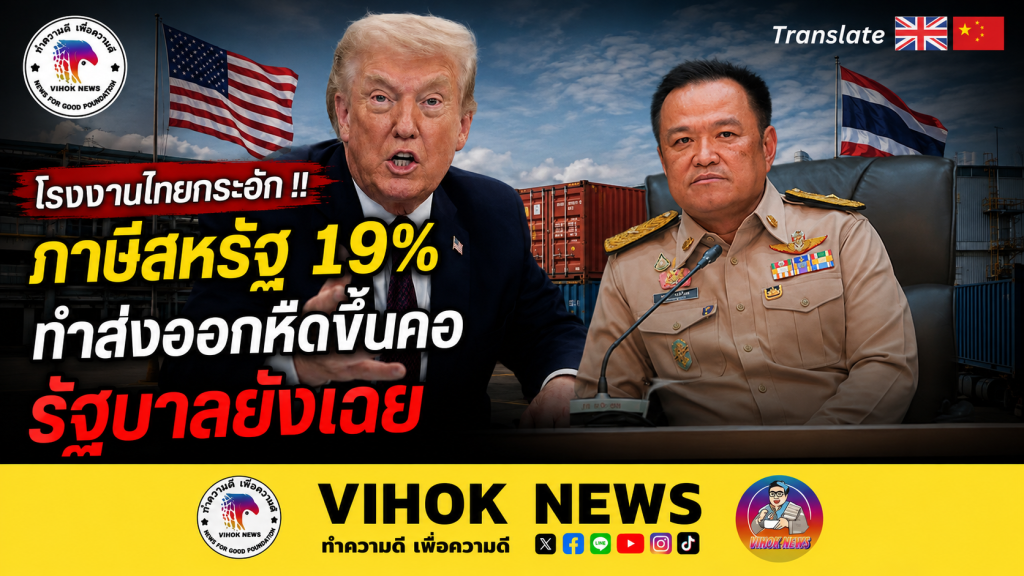
ภาษีสหรัฐ 19% กำลังกลายเป็นโจทย์จริงของโรงงานไทย เพราะกระทรวงการคลังต้องเร่งให้แต่ละอุตสาหกรรมสรุปผลกระทบ และหาทางช่วยกลุ่มที่ไม่ได้อยู่ใต้ร่ม BOI ก่อนต้นทุนส่งออกจะกัดลึกกว่านี้
ประเด็นนี้เริ่มชัดหลังมีความชัดเจนว่า สหรัฐจะเก็บภาษีศุลกากรตอบโต้กับสินค้านำเข้าจากไทยในอัตรา 19% นายพิชัย ชุณหวชิร รองนายกรัฐมนตรีและรัฐมนตรีว่าการกระทรวงการคลัง ระบุว่าได้สั่งให้แต่ละกลุ่มอุตสาหกรรมเร่งสรุปรายละเอียดผลกระทบ เพราะแต่ละกลุ่มไม่ได้เจ็บเท่ากัน และรัฐบาลต้องคุยเป็นรายกลุ่มเพื่อหามาตรการช่วยให้ตรงจุด
กลุ่มที่ถูกพูดถึงมีทั้งอิเล็กทรอนิกส์ อาหารสำเร็จรูป และเครื่องใช้ไฟฟ้า บางกลุ่มอาจรับแรงกระแทกได้น้อยกว่าหรือมากกว่ากันตามระดับกำไรและโครงสร้างต้นทุน แต่สิ่งที่เหมือนกันคือทุกกลุ่มต้องตอบคำถามใหม่ว่า เมื่อสินค้าถูกเก็บภาษีเพิ่ม ใครจะเป็นคนรับต้นทุน ผู้ผลิตไทย ลูกค้าต่างประเทศ หรือ supply chain ทั้งระบบ
ความยากของไทยอยู่ที่การแบ่งสองกลุ่มใหญ่ กลุ่มแรกคืออุตสาหกรรมที่ได้รับส่งเสริมจาก BOI ซึ่งมีกองทุนเพิ่มขีดความสามารถในการแข่งขันรองรับอยู่แล้ว อีกกลุ่มคือผู้ประกอบการที่ไม่ได้รับส่งเสริมจาก BOI แต่โดนภาษีเหมือนกัน รัฐบาลจึงต้องพิจารณาว่าจะใช้กลไก BOI หรือกลไกอื่นช่วยกลุ่มนี้ได้อย่างไร
นี่เป็นเรื่องที่โยงกับอสังหาและนิคมอุตสาหกรรมโดยตรง เพราะโรงงานไม่ได้ตัดสินใจลงทุนจากค่าแรงหรือที่ดินอย่างเดียวอีกต่อไป แต่ตัดสินใจจากกติกาการค้า ภาษีถิ่นกำเนิดสินค้า ต้นทุนไฟฟ้า logistics และความเร็วของภาครัฐในการช่วยปรับตัว ถ้าผู้ส่งออกไทยตอบโจทย์ภาษีไม่ได้ การขยายโรงงานและการเช่าพื้นที่อุตสาหกรรมอาจช้าลง
อีกประเด็นที่ต้องรอความชัดเจนคือหลักเกณฑ์คำนวณมูลค่าในประเทศ หรือ RVC ซึ่งยังไม่มีรายละเอียดแน่ชัดจากฝั่งสหรัฐ ถ้ากติกานี้เข้มมาก ผู้ประกอบการไทยอาจต้องปรับแหล่งวัตถุดิบ เพิ่ม local content หรือเปลี่ยนโครงสร้าง supply chain เพื่อให้สินค้ายังเข้าเงื่อนไขส่งออกได้
สำหรับนักลงทุน นี่ไม่ใช่ข่าวที่ควรอ่านแบบกลัวอย่างเดียว แต่ควรอ่านเป็นข่าวคัดผู้ชนะ ผู้ประกอบการที่มีกำไรสูง ลูกค้าหลากหลาย และ supply chain ปรับได้ จะมีโอกาสผ่านภาษีได้ดีกว่า ส่วนธุรกิจที่ margin บาง พึ่งตลาดเดียว และอยู่นอกมาตรการสนับสนุน จะถูกบีบให้ปรับตัวหนักกว่าเดิม
มุมมองนักวิเคราะห์ต่อเหตุการณ์นี้
มุมอ่านจากข้อมูลในข่าวคือ ภาษี 19% ไม่ได้กระทบทุกอุตสาหกรรมเท่ากัน และนี่คือเหตุผลที่คลังต้องให้แต่ละกลุ่มสรุปตัวเลขของตัวเองก่อนออกมาตรการ ถ้าช่วยแบบกว้างเกินไป เงินรัฐอาจไม่ลงจุดที่เจ็บจริง แต่ถ้าช้าเกินไป ผู้ประกอบการที่อยู่นอก BOI อาจเสียคำสั่งซื้อก่อนมาตรการมาถึง
ภาษีสหรัฐจึงกำลังเปลี่ยนโจทย์ไทยจาก “ดึงลงทุนให้เข้า” เป็น “ทำให้คนที่ลงทุนแล้วอยู่รอดและแข่งขันได้” ทำเล โรงงาน และนิคมที่ชนะหลังจากนี้จะไม่ใช่แค่ที่ดินดี แต่ต้องอยู่ในระบบที่ช่วยให้ผู้ประกอบการผ่านกติกาการค้าใหม่ได้เร็ว
สำนักข่าววิหคนิวส์
อ้างอิง : สำนักข่าว Property Expert live, BOI สำนักงานคณะกรรมการส่งเสริมการลงทุน
#ภาษีสหรัฐ #ภาษีTrump #เศรษฐกิจไทย #BOI #ส่งออกไทย #นิคมอุตสาหกรรม #อสังหา#สำนักข่าววิหคนิวส์
+++
Thai Manufacturers Face Growing Pressure as 19% U.S. Tariff Threatens Exports, Government Scrambles for Relief Measures
Bangkok — August 11, 2026
Thailand’s manufacturing sector is facing mounting pressure from a 19% U.S. tariff on Thai imports, prompting the Ministry of Finance to accelerate an industry-by-industry assessment of the impact and explore support measures, particularly for businesses that do not currently receive investment privileges from the Board of Investment (BOI).
The issue has become increasingly urgent following confirmation that the United States will impose a 19% reciprocal tariff on goods imported from Thailand.
Deputy Prime Minister and Finance Minister Pichai Chunhavajira said he had instructed individual industry groups to urgently assess and report the extent of the impact, noting that the effects would vary significantly across sectors.
The government, he said, would need to consult directly with each industry in order to design targeted assistance rather than applying a single policy across the entire manufacturing sector.
Industries under particular scrutiny include electronics, processed foods and electrical appliances. Their ability to absorb the additional tariff burden will depend on factors such as profit margins and cost structures.
However, all exporters now face the same fundamental question: when tariffs increase, who will ultimately bear the additional cost — Thai manufacturers, overseas customers, or participants throughout the supply chain?
BOI and Non-BOI Companies Face Different Challenges
One of Thailand’s key challenges is the division between two major groups of manufacturers.
The first consists of industries receiving BOI investment promotion, which already have access to mechanisms such as competitiveness enhancement funds.
The second group includes companies that do not receive BOI privileges but are nevertheless exposed to the same U.S. tariff.
The government must therefore consider whether existing BOI mechanisms can be extended or whether alternative measures will be required to support companies outside the investment-promotion framework.
Industrial Property and Factory Investment Could Also Be Affected
The tariff issue is directly linked to Thailand’s industrial property and industrial estate sectors.
Factory investment decisions are no longer determined solely by labor costs or land prices. Investors increasingly consider trade regulations, rules of origin, electricity costs, logistics expenses and the speed with which governments can respond to changing global trade conditions.
If Thai exporters are unable to manage the additional tariff burden effectively, factory expansion projects and demand for industrial rental space could slow.
Another unresolved issue is the methodology that the United States will use to calculate Regional Value Content, or RVC.
Detailed rules have yet to be clarified.
If the requirements are particularly stringent, Thai manufacturers may have to adjust their sourcing strategies, increase local content or restructure supply chains in order for their products to continue meeting eligibility requirements for exports to the U.S. market.
Tariffs Could Separate Stronger Businesses From Vulnerable Ones
For investors, the tariff should not be viewed solely as a negative development. It may also become a factor that separates stronger companies from weaker competitors.
Businesses with higher profit margins, diversified customer bases and flexible supply chains are likely to be better positioned to absorb or adapt to the tariff.
By contrast, companies operating on thin margins, heavily dependent on a single export market and outside government support programs may face considerably greater pressure to restructure their operations.
Analyst View
The available information suggests that the 19% tariff will not affect every Thai industry equally.
This explains why the Ministry of Finance is asking individual sectors to quantify their own exposure before the government introduces assistance measures.
If support is designed too broadly, public funds may fail to reach the industries facing the greatest pressure. But if the response is too slow, exporters outside the BOI framework could lose orders before government assistance arrives.
The U.S. tariff is therefore changing Thailand’s economic challenge from simply “attracting investment” to ensuring that companies already operating in the country can survive and remain competitive.
The industrial locations, factories and estates most likely to succeed under the new trade environment will not necessarily be those offering only attractive land prices or locations. They will increasingly need to operate within ecosystems capable of helping manufacturers adapt quickly to new global trade rules.
Vihok News
Sources: Property Expert Live; Thailand Board of Investment (BOI)
#USTariffs #TrumpTariffs #ThaiEconomy #BOI #ThaiExports #IndustrialEstates #RealEstate #VihokNews
+++
美国19%关税加剧泰国制造业压力 出口承压 政府加紧研究纾困措施
曼谷 — 2026年8月11日
美国对泰国进口商品征收19%的关税,正逐渐成为泰国制造业面临的现实压力。泰国财政部已要求各产业加快评估实际影响,并研究针对性支持措施,尤其是帮助目前未获得泰国投资促进委员会(BOI)优惠政策的企业,以避免出口成本进一步侵蚀企业竞争力。
随着美国将对来自泰国的进口商品征收19%对等关税的政策进一步明确,这一问题的重要性也迅速上升。
泰国副总理兼财政部长披猜·春哈瓦集拉(Pichai Chunhavajira)表示,已要求各产业尽快整理和评估关税带来的具体影响。
他指出,不同行业所承受的冲击并不相同,因此政府需要分别与各产业进行磋商,根据实际情况制定更具针对性的援助措施,而不是采用“一刀切”的政策。
目前受到关注的行业包括电子产品、加工食品以及电器制造业。
由于各行业利润率和成本结构不同,对新增关税成本的承受能力也存在明显差异。
但所有出口企业都必须面对一个新的核心问题:当进口关税增加后,这部分额外成本最终由谁承担——泰国生产商、海外客户,还是整个供应链共同分担?
BOI企业与非BOI企业面临不同处境
泰国当前面对的一项重要挑战,是制造企业大致可以分为两个主要群体。
第一类是获得泰国投资促进委员会(BOI)投资优惠的企业。这些企业已经可以通过提升国家竞争力基金等机制获得一定支持。
另一类则是未获得BOI投资优惠的企业。
虽然这些企业无法享受相关扶持政策,却同样需要面对美国19%的关税压力。
因此,泰国政府必须评估,是否能够利用现有BOI机制扩大援助范围,或者建立新的政策工具,为BOI体系之外的企业提供支持。
工业地产和工厂投资也可能受到影响
此次关税问题也与泰国工业地产和工业园区市场直接相关。
如今,企业决定是否投资建设工厂,考虑的因素已不仅是劳动力成本或土地价格。
贸易规则、原产地规定、电力成本、物流费用,以及政府应对全球贸易规则变化的速度,都正在成为投资决策中的重要因素。
如果泰国出口企业无法有效应对新增关税压力,未来工厂扩建计划以及工业用地和厂房租赁需求都可能放缓。
另一个仍需等待明确的关键问题,是美国未来将如何计算“区域价值含量”(Regional Value Content,RVC)。
目前,美方尚未公布详细的计算标准。
如果相关规定非常严格,泰国企业可能需要重新调整原材料采购来源,提高本地采购比例,甚至重新设计整个供应链结构,以确保产品继续符合进入美国市场的相关条件。
19%关税或将加速企业分化
对于投资者而言,这项关税政策不应只被视为负面消息,同时也可能成为筛选产业竞争力的重要因素。
利润率较高、客户市场更加多元,同时供应链调整能力较强的企业,预计将拥有更大的空间消化或转移关税成本。
相反,那些利润率较低、过度依赖单一市场,同时又未获得政府支持政策的企业,将面临更大的经营和转型压力。
分析观点
从目前公布的信息来看,美国19%的关税不会对泰国所有产业造成同等程度的影响。
这也是泰国财政部要求各产业分别整理实际影响数据后,再决定政策措施的重要原因。
如果政府采取过于宽泛的援助方式,财政资源可能无法真正流向受冲击最严重的行业。
但另一方面,如果政策出台速度过慢,特别是那些不属于BOI扶持体系的企业,可能在政府措施到位之前就已经失去海外订单。
因此,美国关税正在改变泰国原有的经济政策课题。
过去的重点可能是“如何吸引投资进入泰国”,但未来更重要的问题将变成“如何让已经在泰国投资的企业继续生存,并保持国际竞争力”。
在新的全球贸易环境下,未来能够胜出的工业园区、工厂和产业区,将不仅仅依靠优越地段或土地成本优势,更重要的是能否建立一个帮助企业快速适应新贸易规则的完整产业生态系统。
Vihok News(วิหคนิวส์)
资料来源: Property Expert Live、泰国投资促进委员会(BOI)
#美国关税 #特朗普关税 #泰国经济 #BOI #泰国出口 #工业园区 #房地产 #VihokNews